How one bank-grade reconciliation workflow became conversational — without exposing raw data, retaining users or writing a line of new code.
Every trading desk I have worked with lives with two versions of the truth. The front office books the trade; the back office settles it, and somewhere between the two, the versions drift. Cash balances do not tie out. Valuations sit a few basis points apart. A trade appears in one system but never makes it into the other.
Front-office/back-office (FOBO) reconciliation exists to catch that drift before it becomes an operational risk, a regulatory finding or a call between two teams that each believe the other is wrong. Most banks I work with already have a version of this workflow built, governed and running daily.
The gap I keep seeing in enterprise AI adoption is not capability. It is access. The people who most need this information in the moment —a project manager chasing an open break before month-end close or an analyst fielding a query from audit — rarely have Alteryx Designer or Excel open, and often should not need to.
That gap is what we explored during the recent Alteryx Partner Preview Programme: could a governed reconciliation workflow be accessed securely through plain language without opening a new route to sensitive data?
The workflow was never the problem
A typical FOBO reconciliation compares trade tickets, cash balances and valuations—matching front-office records against back-office records before surfacing anything that does not tie out: a mismatch, a record missing on one side or a difference in a key economic value.
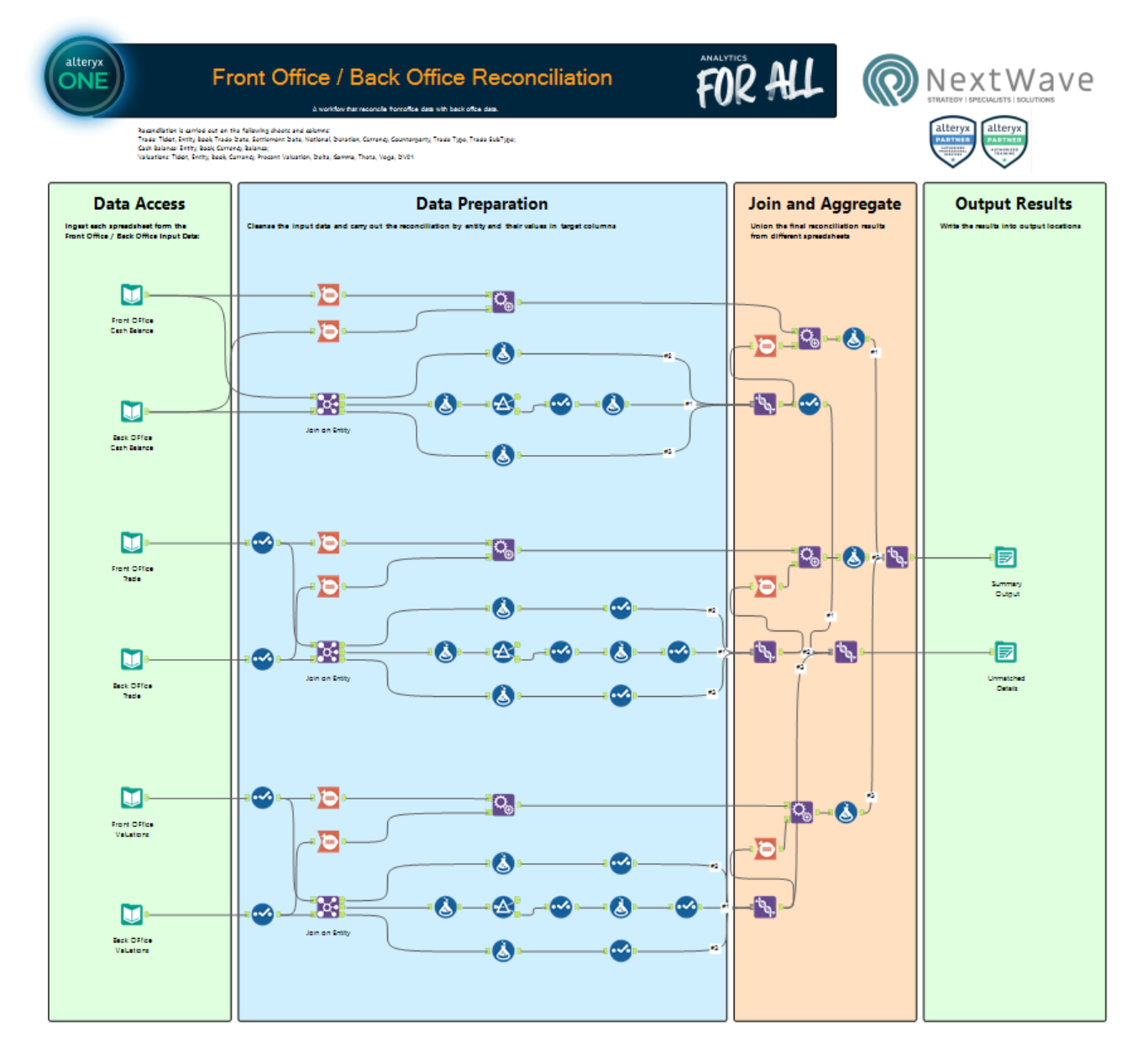
This is a well-understood problem, and many organisations have already built the workflow needed to solve it and subjected it to the scrutiny required to earn trust in its output. The question we wanted to answer was never whether the reconciliation runs correctly—it already does. The question was who could access it, and how easily.
Turning a workflow into something you can simply ask for
What changed with the Alteryx One Workflow MCP Server was not the reconciliation logic. It was the front door. The same governed Alteryx workflow can now be registered as a callable tool and accessed through natural language by a business user, without Alteryx Designer installed on their machine.
Crucially, control does not shift. Engineering still decides exactly which workflows are exposed and who is granted permission to interact with them.
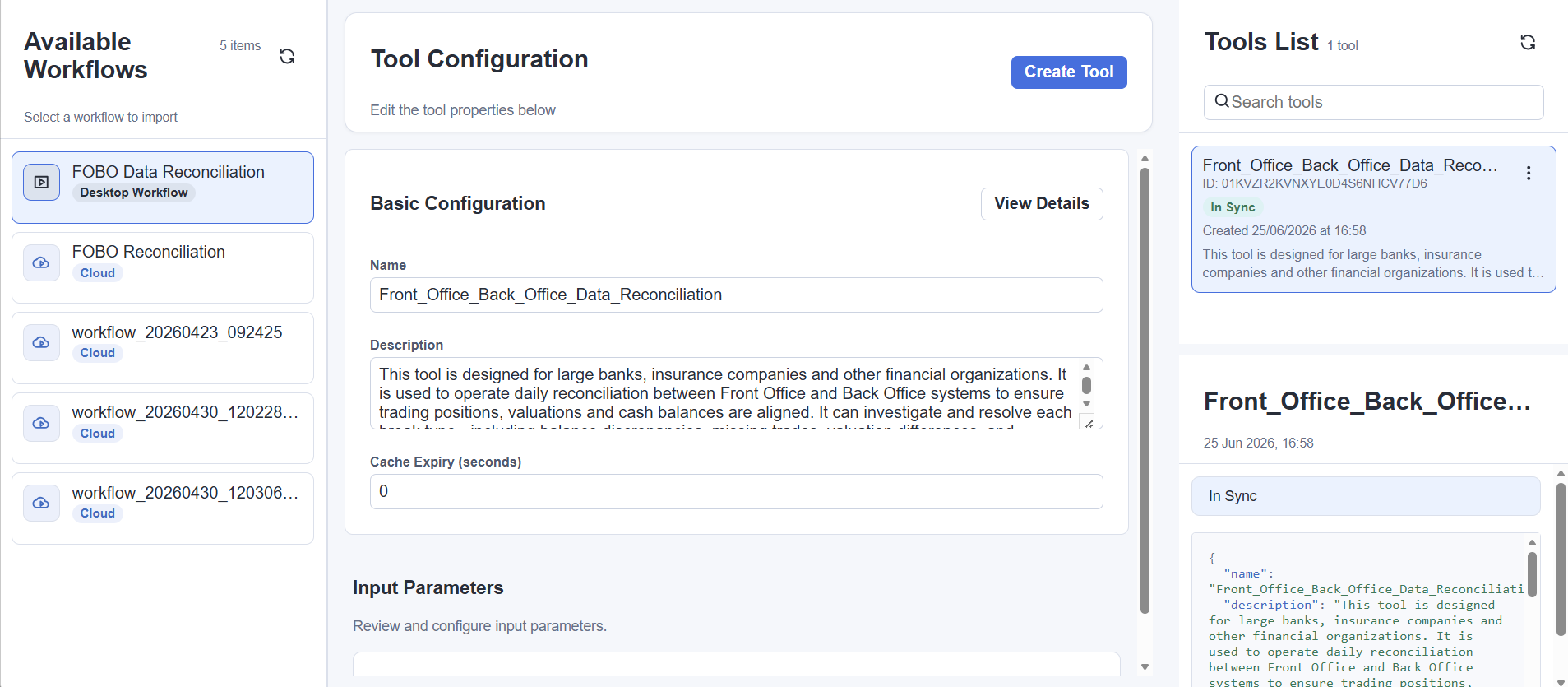
The effort required to expose an existing workflow in this way is modest. There is no rebuild, no parallel version to maintain, and the approach is not tied to a single AI provider.
Why this does not introduce chatbot guesswork
This is the point that matters most to anyone accountable to a control framework. The AI model never touches the raw source data, and it never performs the reconciliation itself. Instead, it calls a workflow whose cleansing, matching and aggregation logic has already been built, tested and owned by your developers. Only the predefined outputs—the reconciliation summary and the identified breaks—are exposed.
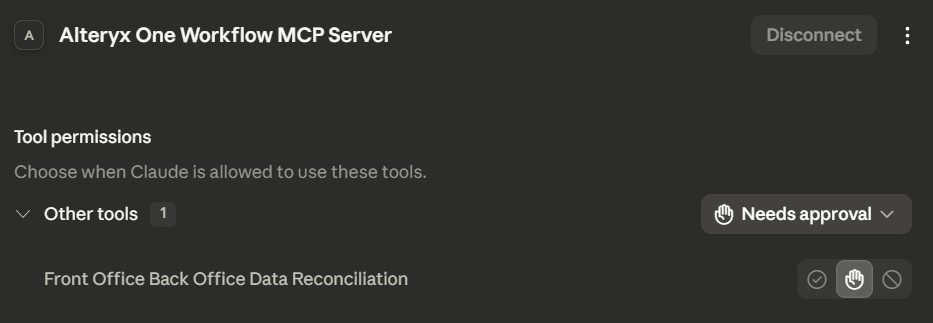
That distinction is what keeps the result deterministic. The same inputs produce the same breaks every time, with the same audit trail behind them, because the arithmetic still happens inside Alteryx One, not inside the language model.
In practical terms, this also reduces the workload for the AI. With the heavy processing completed upstream, the model uses fewer tokens to interpret and present the result, making the interaction faster and more economical at scale. And because the workflow already exists, there is no months-long build. You are placing a conversational front end on something your team delivered some time ago.
What it looks like in practice
In our test, asking the assistant to run the daily reconciliation and summarise the outcome produced a full breakdown within minutes: 11 breaks across three record types, the break rate by category, the match rate by spreadsheet, and a detailed log identifying each discrepancy down to the reference ID.
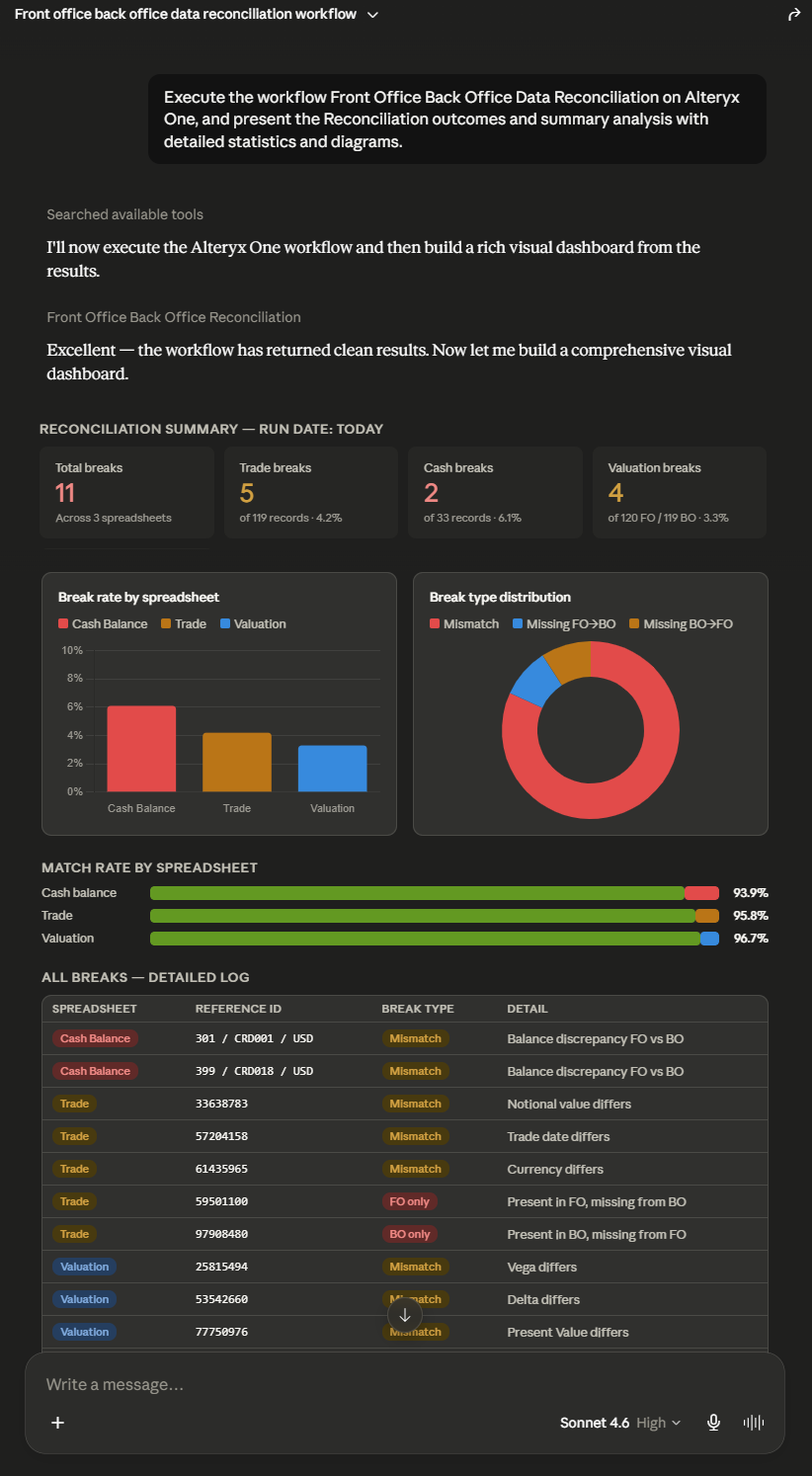
None of that required a spreadsheet download, a scheduled report or a wait for someone with system access to run the job. It was a question asked in ordinary language and answered using the same governed output the workflow had always produced.
Meeting teams where they already work
The pattern is not limited to a chat window in your preferred AI platform. The same governed access can sit inside the messaging applications already deployed across your organisation—Slack, Teams or an internal assistant—so a business user can run the reconciliation, ask a follow-up question about a specific break and receive a summary without switching tools or signing in to another system.
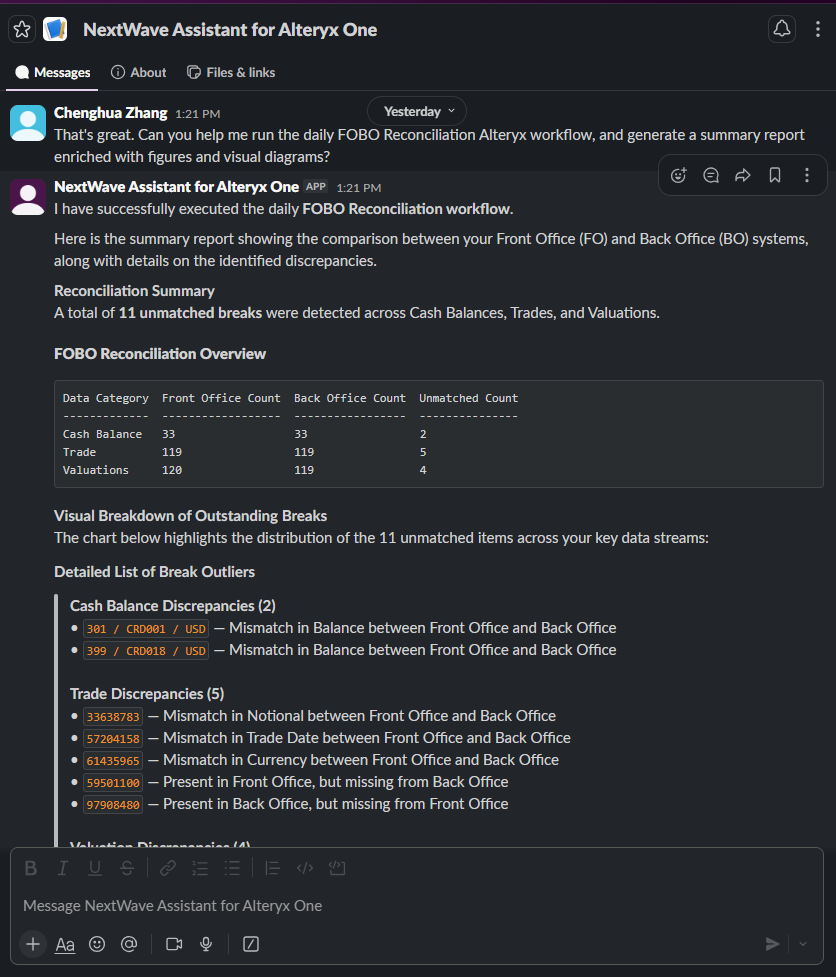
That reduces friction for business users while preserving the governance already built into the workflow.
For organisations assessing cost to serve, this is where the economics become compelling: one governed workflow, accessible from wherever users already work, with minimal incremental training and no new interface to roll out.
Closing thought
The story here is not simply that AI can now run a reconciliation. It is that the governed automation your organisation has already built can now be accessed conversationally—safely, deterministically and without re-platforming. For institutions with years of investment in Alteryx workflows, this represents a considerably faster route to enterprise AI than starting again.
I expect this pattern to extend well beyond reconciliation, to KYC, regulatory reporting, controls testing, finance operations and any controlled, repeatable process that organisations have already automated and now want more people to access through natural language.
At NextWave, we help financial services organisations unlock greater value from the automation they have already built. By combining governed Alteryx workflows with emerging AI capabilities, we help clients accelerate access to trusted insights while maintaining the governance, security and control that regulated organisations demand.
If you're exploring how to extend your existing Alteryx investment into enterprise AI, get in touch with the NextWave team to discuss how we can help accelerate your journey.
