Over the past few weeks, I’ve been working on a project that I’m excited to finally share: a fully automated data validation tool built end-to-end in Alteryx. The goal is simple – help teams quickly evaluate the quality, consistency, and reliability of their tabular datasets before those datasets reach downstream analytics, reporting, or decision-making processes.
As organisations rely more heavily on data, ensuring that it is accurate, complete, and fit for purpose becomes essential. This tool was built with that requirement in mind.
How the tool works
The data validation tool accepts two simple inputs:
Tabular data
Any structured dataset – CSV, Excel, database extract, or another tabular source.
Field mapping specification
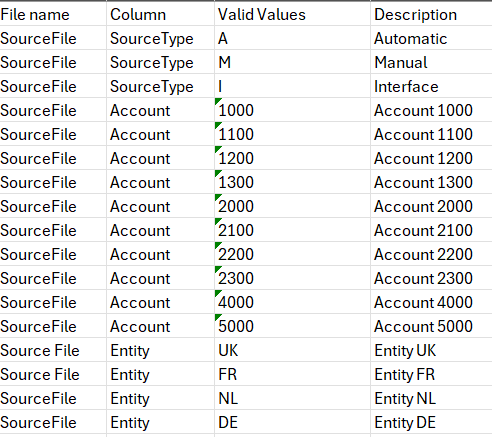
A user-defined configuration that describes the expectations for each column within the dataset, including:
- Null checks – identify mandatory fields and flag missing values
- Uniqueness checks – validate primary keys or business-critical identifiers
- Lookup value checks – compare column values against approved lists such as status codes, categories, or controlled vocabularies
- Date logic checks – detect dates that fall outside expected tolerances (for example, future birth dates or expired contracts)
- Minimum / maximum checks – detect numeric values outside specified ranges (such as unusually large monetary values or normalised probabilities)
- Failure thresholds – define the maximum acceptable percentage of erroneous values within a column before the dataset is flagged
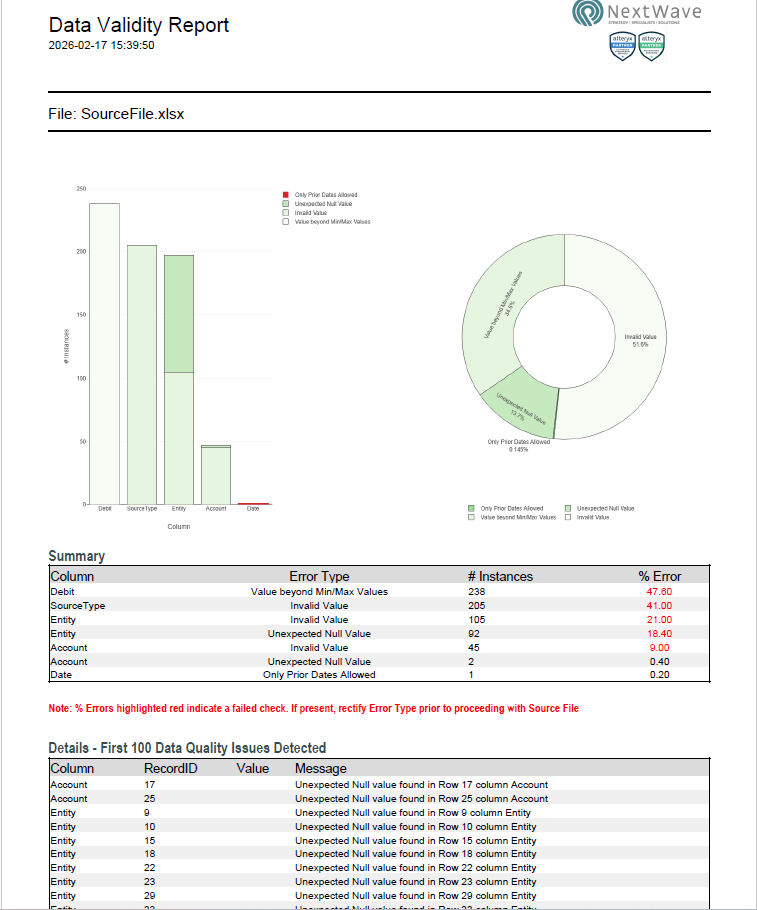
The workflow automates these evaluations, compiles the results into a clear validation report, and highlights exceptions that require attention. What previously required hours of manual review can now be completed automatically in a single run.
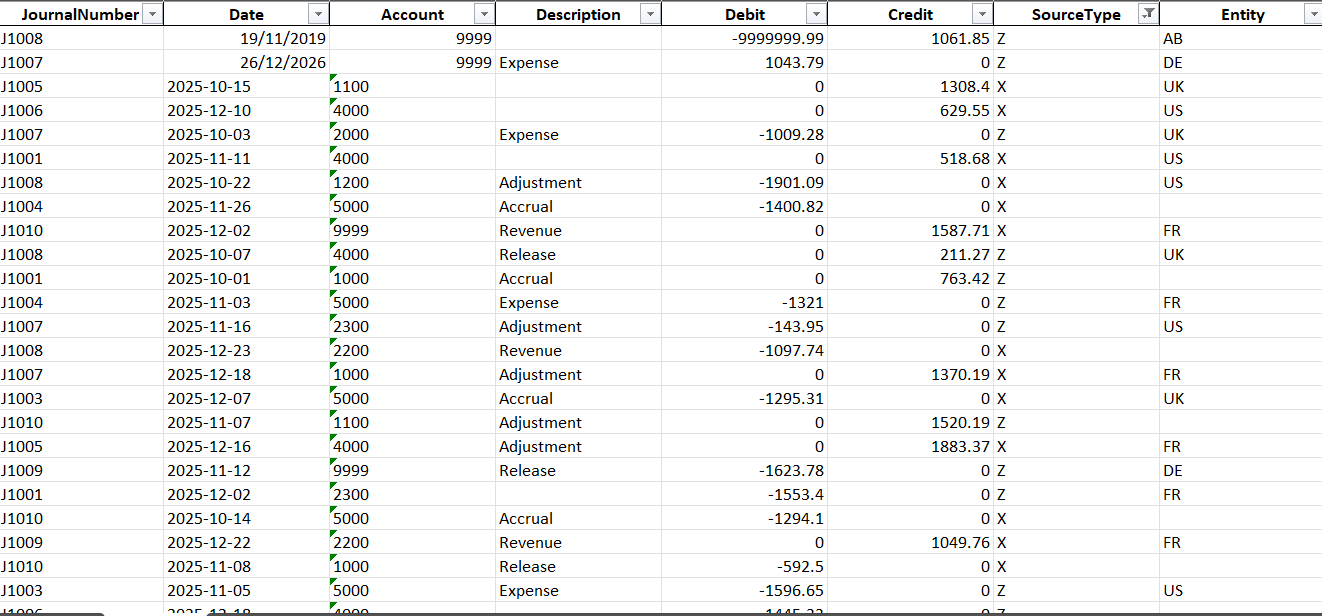
Messy" journal data:
Field Mapping:

Lookup values:
Outputted PDF Report:
Why Alteryx?
Alteryx offers a strong balance between rapid development, repeatability, and user-friendly configurability.
This tool uses several capabilities within the platform:
- Dynamic input handling
- Configurable business rules
- Scalable validation logic
- Automated exception reporting
End users do not need to write code. They provide the dataset, define the validation rules, and run the workflow.
The impact
Embedding a validator upstream in analytics workflows creates several benefits:
- Cleaner, more trusted datasets
- Faster turnaround times for reporting
- Reduced operational risk
- Greater confidence in data-driven decisions
It also encourages a shift in working practices, moving teams away from reactive data clean-up and towards proactive data governance.
Aligned with our approach: Strategy. Specialists. Solutions.
This project reflects the philosophy that guides how we approach data and analytics work:
Strategy – understanding the business need behind stronger data governance
Specialists – applying technical expertise in Alteryx and workflow design
Solutions – delivering practical tools that solve real problems today and scale for tomorrow
What’s next?
I’m continuing to enhance the tool with several developments in progress, including:
- Dynamic rule libraries
- Integration with workflow orchestration
- Dashboard visualisations to monitor validation trends over time
If your team is working through data quality challenges, or looking to embed automated validation within existing analytics workflows, I’d be happy to connect and share more.
Here’s to building data foundations teams can trust.
